How do you combine a Kilimanjaro climb with a safari?
Kilimanjaro and the northern safari parks share the same gateway, Kilimanjaro International Airport (JRO), so a climb and a safari fit well into one trip. Most climbs take about six to nine days on the mountain, depending on the route. Many travellers climb first and then rest on a three- to five-day safari in Tarangire, the Ngorongoro Crater or the Serengeti. The drier months, roughly January to early March and June to October, suit both.
Kilimanjaro in brief
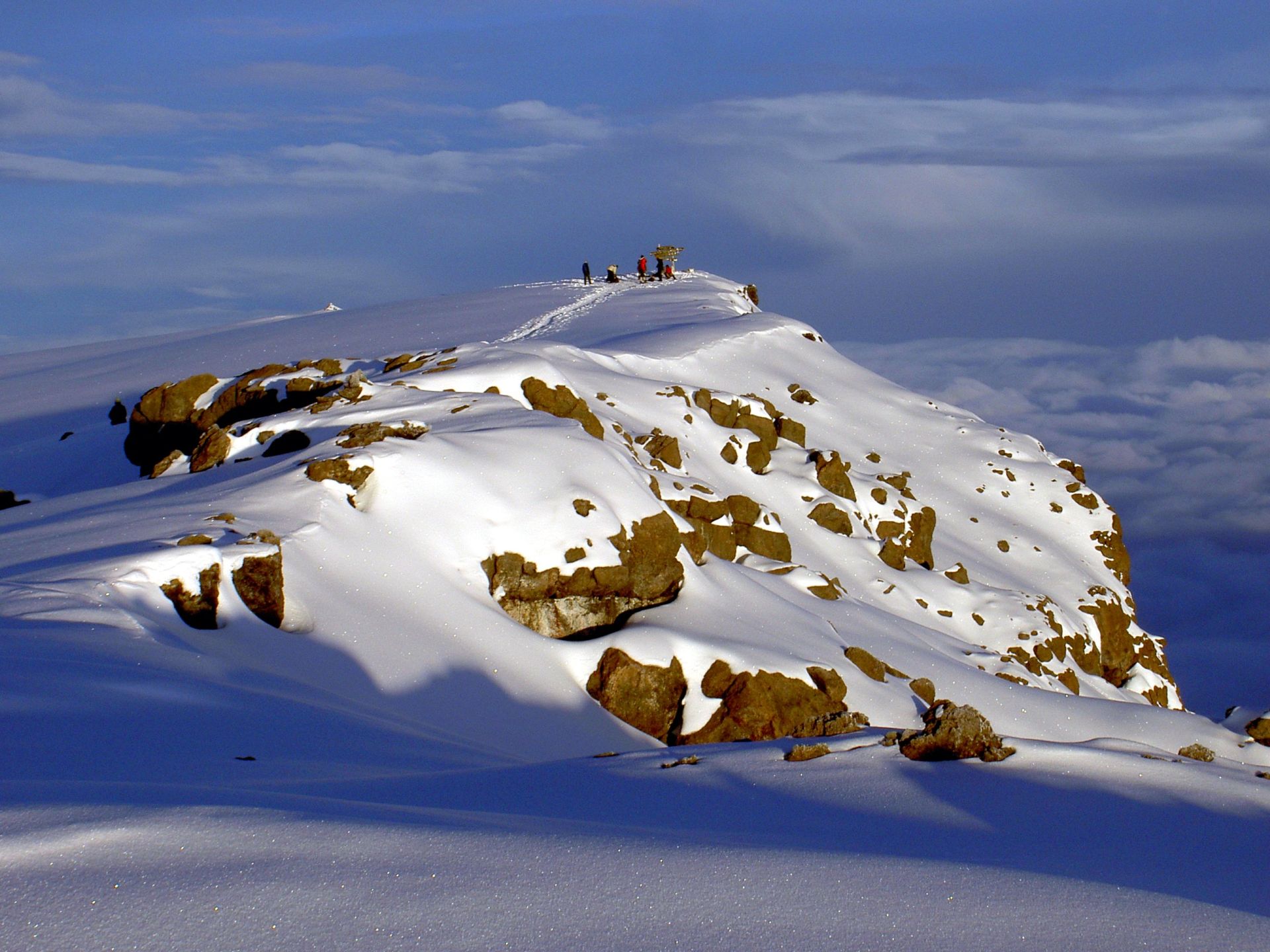
Mount Kilimanjaro is Africa's highest mountain. Its summit, Uhuru Peak, stands at 5,895 metres on the rim of the Kibo cone. It's a free-standing volcano in north-eastern Tanzania, protected as Kilimanjaro National Park, and the town of Moshi sits on its lower slopes.
The standard routes need no technical climbing. That doesn't make it easy. The altitude is the real challenge, and it affects people regardless of how fit they are.
For safari travellers, the geography is convenient. Kilimanjaro International Airport (JRO) lies between Moshi and Arusha, the usual starting point for a northern circuit safari, so the mountain and the parks fit into one trip without extra flights. Our Mount Kilimanjaro page covers the mountain itself.
The main routes
Each route has its own character. The longer ones give your body more time to adjust to the altitude, which generally improves your chances of reaching the summit.
- Marangu: the only route with hut accommodation rather than tents. Shorter versions leave less time to acclimatise.
- Machame: popular and scenic, with camping and some steep sections, including the Barranco Wall.
- Lemosho: starts on the western side and crosses the Shira Plateau. Longer, quieter at first, and often recommended for acclimatisation.
- Rongai: approaches from the north, near the Kenyan border, on the drier side of the mountain.
- Northern Circuit: the longest route, circling the quieter northern slopes before the summit.
- Umbwe: steep and direct, best left to experienced trekkers.
Most climbs take about six to nine days on the mountain, depending on the route and the number of acclimatisation days.
Is a climb right for you?
You don't need mountaineering experience, but you do need to be comfortable walking for several hours a day, several days in a row. Summit night usually starts around midnight, in the cold, and runs into the next afternoon.
Altitude sickness can affect anyone. Talk to your doctor or a travel health clinic before you commit, especially if you have a heart or lung condition. On the mountain you'll hear "pole pole", Swahili for "slowly, slowly". It's the best advice there is.
When to climb
The drier months are the most popular for climbing: roughly January to early March, and June to October. The long rains, around April and May, bring wet, muddy trails, and November can also be rainy.
Both windows line up with good safari months. June to October pairs a climb with the long dry season in the parks. January and February pair it with the calving season in the southern Serengeti. See when to visit Tanzania for the safari side.
Climb first or safari first?
Most people climb first. You arrive fresh, with your energy and your acclimatisation still ahead of you. Afterwards, a safari is the perfect recovery: you sit, you watch, someone else drives, and your legs get a rest.
Safari first suits travellers who'd like time to get over long-haul flights and change time zones gently before the climb. The risk is a late finish to the mountain cutting into onward plans.
Our view: if the summit matters most to you, climb first, and leave a night in a hotel between coming off the mountain and starting the safari. A hot shower and a proper bed make a real difference.
Luggage between the mountain and the parks
Kilimanjaro kit is bulky: a warm sleeping bag, a down jacket, thermal layers and boots. If any part of your safari uses light aircraft, luggage is usually limited to around 15 kg per person, so the climbing kit can't come with you. Confirm the exact limit with your airline.
The usual answer is to leave the mountain kit in storage at a hotel in Moshi or Arusha and travel on with a soft safari bag. Our Tanzania safari packing list covers what goes in it.
Your mountain crew
Every climb is supported by a team of guides, porters and cooks, who carry the camp, cook every meal and set the pace. Tipping the crew at the end is customary. Ask for current guidance when you plan, so you can bring the right amount in cash.
It's also fair to ask any operator how porters are paid, how heavy their loads are and what kit they're given for the cold. A well-looked-after crew is a safer crew.
Ways to combine a climb and a safari
- Climb plus a short safari: follow the mountain with two or three days in Tarangire and the Ngorongoro Crater, as on our 3-day Tarangire and Ngorongoro safari or the 4-day northern circuit safari.
- Climb plus the Serengeti: add enough days for the big plains, as on the 5-day classic Tanzania safari.
- Climb, safari and beach: finish on the Indian Ocean. Our guide to Zanzibar after a safari explains how the coast fits in.
Arusha National Park is worth a look too. On clear days it has views of Kilimanjaro and Mount Meru, and guided walks with an armed ranger can be arranged where permitted, which makes a gentle warm-up for the legs.
If you'd like to add a climb to your safari, mention it when you plan your safari and we'll talk through the timing with you. The Kilimanjaro and safari page has more on combining the two.