
Arusha National Park
A compact park on the slopes of Mount Meru, close to Arusha town: montane forest with black-and-white colobus, the Momella lakes, Ngurdoto Crater and guided walks with an armed ranger, where arranged.
Plan your time here
Tell us your dates and what you would like to see, and we will suggest a route.
Mount Meru's park
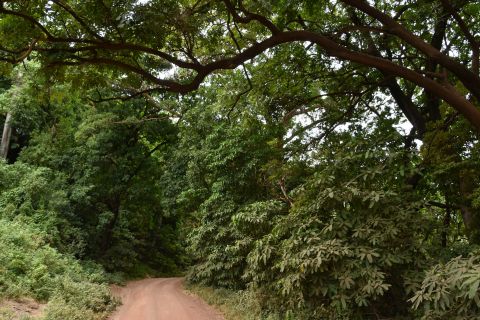
Arusha National Park covers the eastern slopes of Mount Meru, which at 4,566 metres is Tanzania's second-highest mountain. The park is small and close to Arusha town, but it packs a lot into a short drive: montane forest, the open glades of Serengeti Ndogo, the forested bowl of Ngurdoto Crater and the shallow, alkaline Momella lakes.
Most northern-circuit routes skip it, which is part of its appeal. You'll often have the forest roads to yourself.
Wildlife and landscape highlights
This is the best place on the northern circuit to see black-and-white colobus monkeys, which leap between the trees with their long white tails trailing behind them. Blue monkeys are common too.
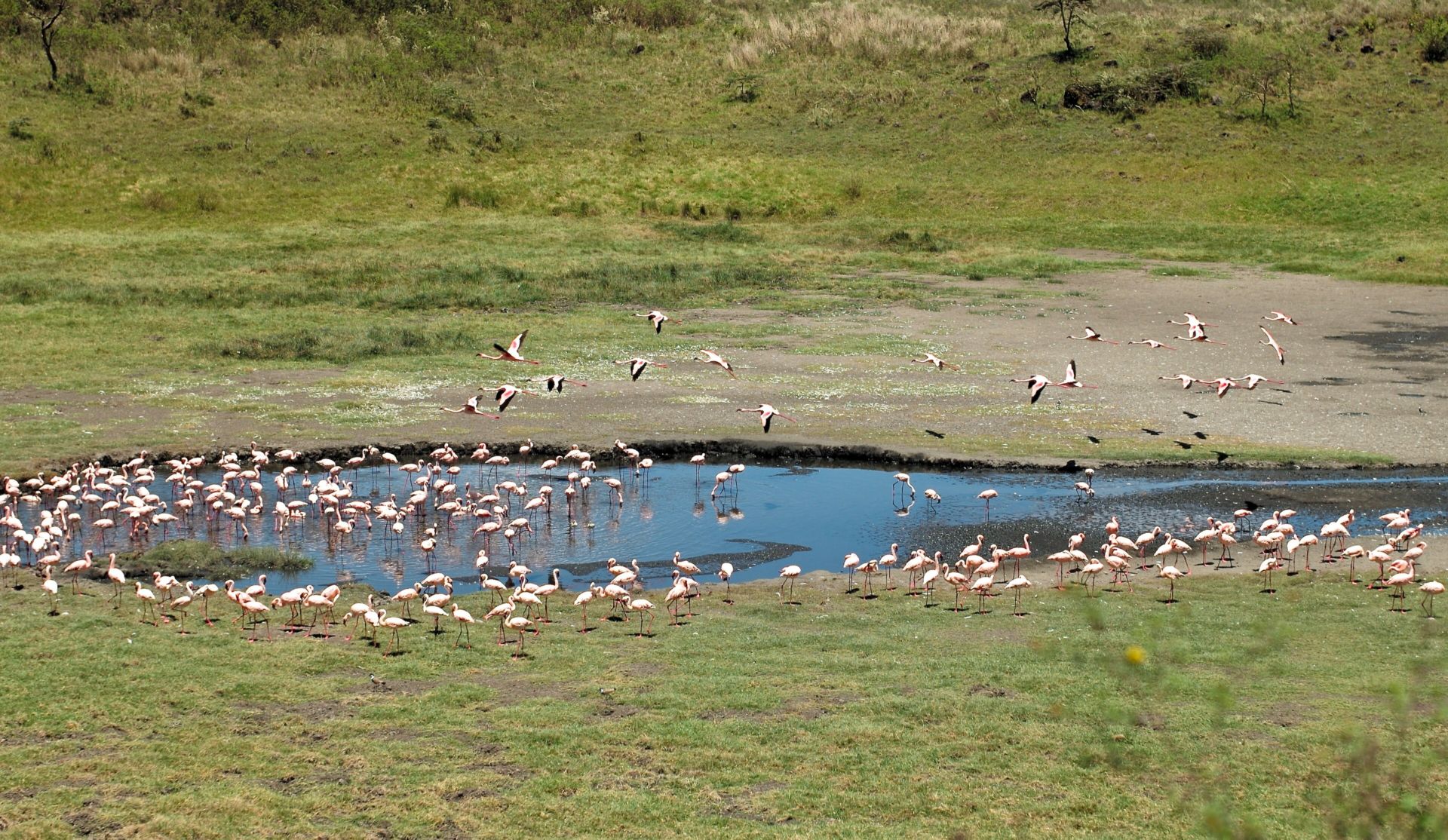
Giraffe, buffalo, zebra and waterbuck graze the glades and the lake margins, and hippo live in some of the Momella lakes. The lakes draw flamingo in some seasons, along with ducks, grebes and waders. Ngurdoto Crater is viewed from its rim, and its swampy floor is left to the buffalo.
Big cats are scarce. Leopard live in the forest but are rarely seen. Come for primates, birds, scenery and walking rather than lion.
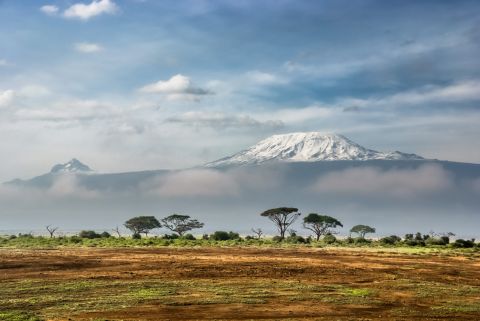
On a clear morning, Kilimanjaro shows itself above the clouds to the east.
Walking and canoeing
Arusha National Park is one of the few places on the northern circuit where you can step out of the vehicle and walk. Guided walks with an armed park ranger can be arranged where permitted, usually through the open country near the Momella lakes and the foot of Meru. Canoeing on Small Momella Lake has also been offered, subject to availability. Read more about walking safaris.
Mount Meru itself is a serious climb of several days, and some people use it to prepare for Kilimanjaro. If it interests you, mention it when you enquire.
Best time to visit
- June to October: the main dry season, with the easiest walking and drier forest roads.
- January and February: a warmer, drier spell between the rains, often with the clearest views of Kilimanjaro and Meru.
- March to May: the long rains, heavy on the mountain. The forest is green but tracks get slippery.
- November and December: the short rains, usually as afternoon showers.
How long to stay
A half day or a full day covers the park well. Stay a night nearby if you'd like to walk in the morning and drive in the afternoon.
Where it fits on a northern-circuit route
Arusha National Park is about an hour from Arusha town and not far from Kilimanjaro International Airport. It fits neatly on an arrival day, a last day before an evening flight, or a spare day before or after a climb.
It makes a good warm-up walk on a Kilimanjaro and safari trip, and a day out on short safaris when you don't have time to go further west.
Practical notes
- Weather: the park is higher, cooler and wetter than the parks further west. Bring a fleece for early mornings and a rain jacket in the wet months.
- On foot: wear closed shoes and neutral colours, and follow your ranger's instructions at all times.
- Where you stay: comfort-level lodges and guesthouses sit on the farms and coffee estates around Arusha and near the park boundary. The choice at luxury level is smaller.
Plan your time
Through the year
Best months to visit: January, February, June, July, August, September, October
-
Warm dry spell
A drier break between the rains, often with the clearest views of Kilimanjaro and Mount Meru in the early morning. Warm days in the glades, cool mornings in the forest.
Warm dry spell: January, February
-
Long rains
Heavy rain on the mountain. The forest is at its greenest, but tracks get slippery and walks may be shortened or cancelled.
Long rains: March, April, May
-
Dry season
The easiest months for walking and driving. Cool, sometimes misty mornings and clear afternoons.
Dry season: June, July, August, September, October
-
Short rains
Showers usually arrive in the afternoon, leaving mornings clear for game drives and walks.
Short rains: November, December
Things to do here
Places to explore
Questions travellers ask
Can we walk in Arusha National Park?
Yes, where arranged. Walking with an armed park ranger is permitted in parts of Arusha National Park, usually around the Momella lakes and the lower slopes of Mount Meru. Walks typically last a couple of hours and you may approach giraffe and buffalo on foot, at a safe distance. Age limits usually apply, and you'll get a safety briefing before setting out.
Is Arusha National Park worth a day if we are short on time?
It's a good choice for an arrival or departure day, or a spare day before or after Kilimanjaro. In a few hours you can see colobus monkeys in the forest, giraffe in the glades and birds on the Momella lakes, with Kilimanjaro on the horizon on clear mornings. It won't replace the bigger parks for lion or elephant, but it's far from a consolation prize.
Will we see lions in Arusha National Park?
Very unlikely. Big cats are scarce in Arusha National Park and leopard, though present, are rarely seen. The park's strengths are its forest primates, its birds, its scenery and the chance to walk. If seeing lion matters to you, add a night or two in Tarangire or Lake Manyara, both a few hours' drive away.
Can we see Kilimanjaro from Arusha National Park?
Often, if the sky is clear. Kilimanjaro is visible to the east from the Momella lakes area and other open parts of the park, usually best in the early morning before cloud builds. January and February and the dry months from June to October give you the best odds. In the rains the mountain can stay hidden for days.
Plan a journey that includes Arusha National Park
Tell us when you would like to travel and what matters to you. We will suggest how long to give Arusha National Park and what to pair it with.