
Where is the Great Migration each month?
In most years the wildebeest herds spend roughly December to March on the southern Serengeti plains, where calving usually peaks in February. From April to June they move north and west through the central Serengeti and the Western Corridor. From about July to October they are often in the northern Serengeti and Kenya's Maasai Mara, crossing the Mara River. In November they head south again. The herds follow the rain, so timing shifts every year.
What the Great Migration is
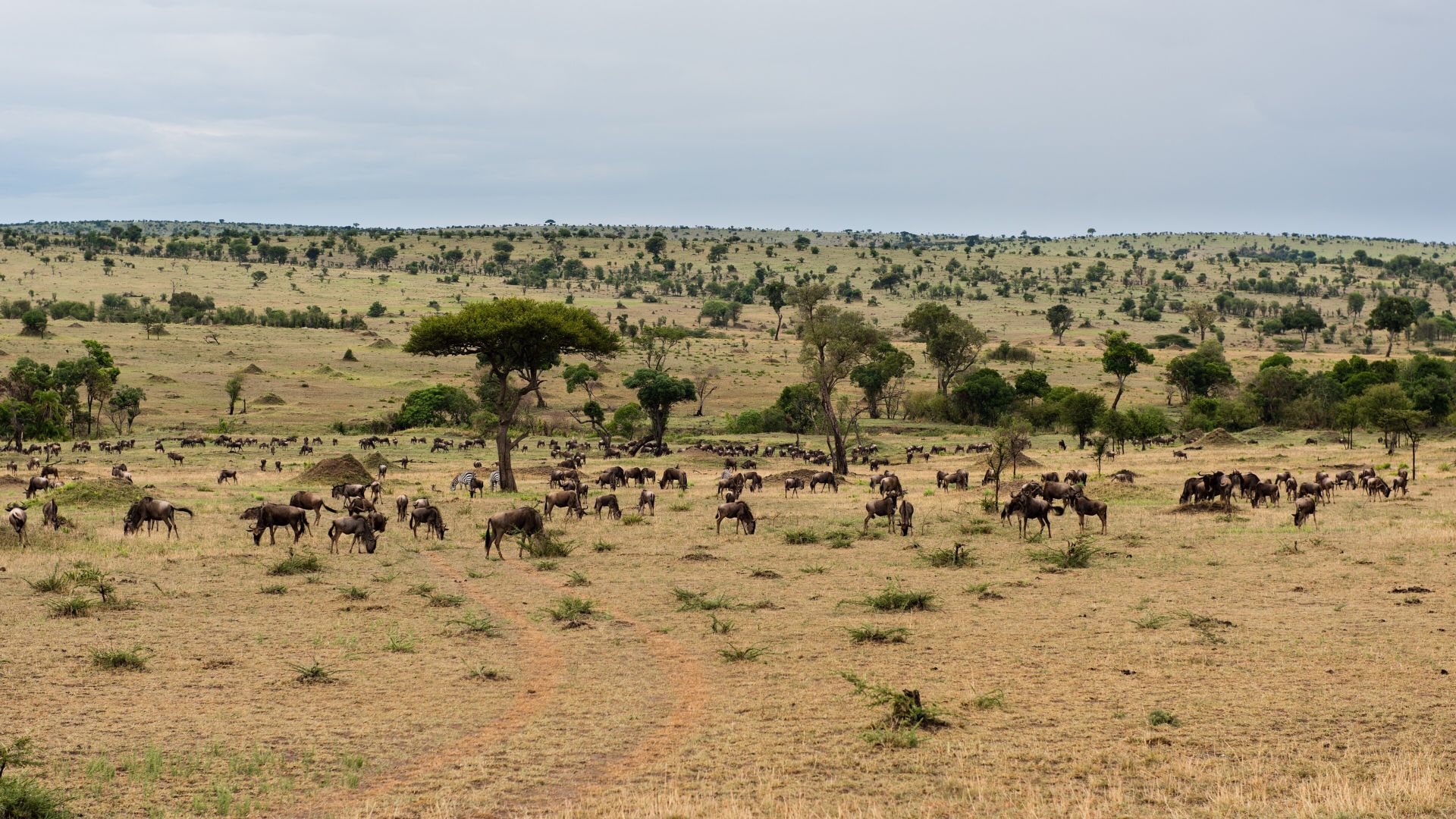
The Great Migration is the year-round movement of more than a million wildebeest, with large numbers of zebra and gazelle, around the Serengeti and Maasai Mara ecosystem. Estimates of the numbers vary. The herds follow rain and fresh grass in a rough loop through Tanzania's Serengeti and into Kenya's Maasai Mara.
There's no start line and no finish line. The animals are always somewhere, always moving. What changes through the year is where they are and what they're doing.
Why nobody can promise dates
The herds respond to rain, and rain doesn't keep a calendar. An early short rain can pull them south weeks ahead of the usual pattern. A dry spell can hold them in one area for longer. They also split into separate groups that may be many kilometres apart.
So read every month below as "in most years, often around here". A good guide reads the season as it unfolds, swaps notes with other guides and takes you to where the animals are this week, not where last year's map says they should be.
The migration month by month
| Month | Where the herds often are | What is often happening |
|---|---|---|
| January | Southern Serengeti and Ndutu | Grazing the short-grass plains, early calving |
| February | Southern Serengeti and Ndutu | Calving peaks in most years, predators busy |
| March | Southern and south-central plains | Calves growing, herds stirring as the rains build |
| April | Central Serengeti | Long rains, herds spread out and moving |
| May | Central and western Serengeti | Rutting season, long columns heading west |
| June | Western Corridor | Herds gathering near the Grumeti River |
| July | Western Corridor to the north | Grumeti crossings possible, herds pushing north |
| August | Northern Serengeti and Maasai Mara | Mara River crossings in most years |
| September | Northern Serengeti and Maasai Mara | Crossings continue, herds on both sides of the river |
| October | Northern Serengeti | Herds start drifting south as the rain approaches |
| November | Eastern and central Serengeti | Short rains, long lines of animals heading south |
| December | Southern Serengeti | Herds settling back onto the short-grass plains |
December to March: the southern plains and calving
The short-grass plains of the southern Serengeti and the neighbouring Ndutu area grow on volcanic soils washed down from the Ngorongoro highlands. After the short rains, the grass here is rich, and the herds come to feed and give birth.
Calving is the main event. In most years a large share of calves are born within a few weeks, often during February. Newborn wildebeest are on their feet within minutes, which matters on plains where lions, cheetahs and spotted hyenas are waiting. It's a raw time to be out there and one of the most rewarding.
Our calving season safari page covers how we plan this window. Ndutu sits within the Ngorongoro Conservation Area, so a calving safari pairs naturally with a day in the Ngorongoro Crater.
April and May: the long rains and the rut
As the southern plains dry out and the long rains arrive, the herds begin to move north and west through the central Serengeti. This is the quietest time to visit. Roads can be muddy and some seasonal camps close, but those who come often have sightings almost to themselves.
Around May the rut gets going. The males grunt, posture and chase rivals, and the noise carries a long way at night.
June and July: the Western Corridor and the Grumeti River
Many herds funnel west into the Western Corridor, where the Grumeti River holds large Nile crocodiles. The Grumeti is smaller than the Mara and, in the dry season, often breaks into a chain of pools, so crossings here tend to be shorter and less predictable. Not every herd takes this route. Some head more directly north through the centre of the park.
August to October: the northern Serengeti and the Mara River
This is the stretch most people picture. The herds reach the northern Serengeti, and many cross the Mara River, some continuing into the Maasai Mara in Kenya before turning back. Crossings are the headline, but they're unpredictable. Herds can mass on the bank for hours and then turn away, or cross several times in a day, back and forth.
Patience is the skill here. Your guide will usually pick a spot with a clear view, keep a respectful distance and wait. Some mornings bring nothing. Others bring a crossing that runs for an hour.
The northern Serengeti is also the busiest area at this time of year. Park rules on keeping distance and staying on roads at crossing points exist for good reasons, and a good guide follows them.
November: heading south
When the short rains start, the herds turn south. They usually move through the eastern and central Serengeti in long, strung-out columns. Watching tens of thousands of animals walking in single file across the plains is quieter than a crossing, and many guides rate it just as highly.
How to plan around the herds
A few principles make the difference:
- Stay in the right area for the month. Camp location matters more than anything else on a migration safari. Some seasonal camps move between the south and the north through the year to stay close to the herds.
- Give it three nights or more. One night in the right area leaves no room for a slow day.
- Keep a day flexible. If the herds are a few hours from where they "should" be, you'll want time to follow them.
- Don't build the trip only around a crossing. The Serengeti has resident lions, leopards, elephants and giraffes in every month. A safari that depends on one event can feel like a near miss, even when it's full of great sightings.
- Think about flying. The Serengeti is huge. On longer trips, a light-aircraft hop between the south and the north can save a long day on the road.
To see how this works in practice, look at our 7-day Great Migration safari or the 6-day Serengeti and Ngorongoro safari. For the wider picture, read our Serengeti National Park guide and when to visit Tanzania. When you're ready, the Great Migration safari page explains how we plan these trips.