
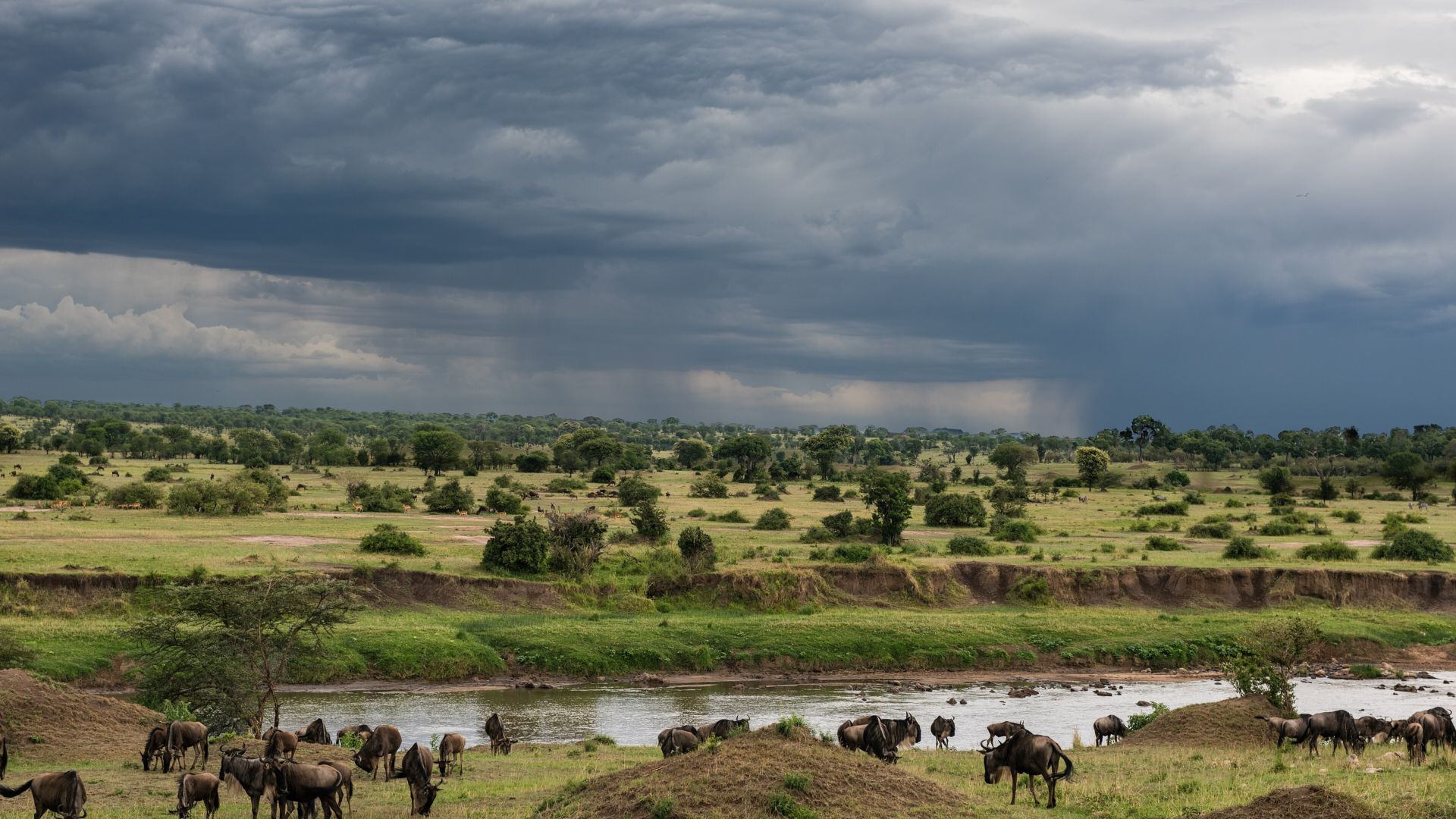
When is the best time to visit Tanzania for a safari?
For classic game viewing, the best time to visit Tanzania is usually the long dry season from June to October, when the grass is short and animals gather near water. January and February are often just as good in the southern Serengeti, where the wildebeest calve. The long rains (roughly March to May) and the short rains (roughly November to December) bring green landscapes and fewer vehicles. Exact timing varies from year to year.
Tanzania's seasons at a glance
Tanzania lies just south of the equator, so the safari year is shaped by rain rather than by summer and winter. In the northern parks there are two rainy seasons and two drier spells. The pattern below holds in most years, but it isn't fixed. An early or late rainy season can shift everything by a few weeks.
| Months | Season | What it usually means |
|---|---|---|
| January to February | Short dry spell | Warm days, green plains, calving in the southern Serengeti |
| March to May | Long rains | Heavy downpours, April usually wettest, fewest visitors |
| June to October | Long dry season | Cool mornings, short grass, animals close to water |
| November to December | Short rains | Passing showers, herds moving south, migrant birds arriving |
No month is a write-off. Each one simply asks for a slightly different plan.
June to October: the long dry season
This is the classic safari season, and for good reason. The grass is short and the bush thins out, so animals are easier to spot. Water becomes scarce, which draws elephants and buffalo to rivers and permanent pools, and the predators follow.
The trade-off is company. July, August and September are the busiest months in the northern parks, and the most popular camps often fill early. If your heart is set on these months, plan well ahead.
Mornings can be properly cold, especially on the Ngorongoro Crater rim and on early drives with the roof up. Afternoons are usually dry and dusty.
November and December: the short rains
The short rains tend to fall as afternoon or evening showers rather than all-day rain, and mornings are often clear. The land greens up quickly and the dust settles. Migrant birds arrive from Europe and Asia, so birders do well.
In the Serengeti, the wildebeest herds usually start drifting south towards the short-grass plains. Visitor numbers are lower than in the dry season, apart from the Christmas and New Year weeks.
January and February: the calving window
Plenty of experienced travellers rank this above the dry season. A drier spell between the two rains often settles over the southern Serengeti and the Ndutu area of the Ngorongoro Conservation Area. The herds gather on the short-grass plains to give birth, and in most years a large share of calves arrive within a few weeks, often in February.
All those young animals draw lions, cheetahs and hyenas. Sightings depend on where the rain has fallen, so a good plan keeps a day flexible. Our calving season safari page explains how we approach this window.
March to May: the long rains
The long rains are the reason some travellers avoid these months, and the reason others pick them. Rain usually arrives in heavy bursts and April is often the wettest month. Some roads turn to mud and a number of seasonal camps close for a few weeks.
What you gain is lush scenery, newborn animals in many parks and far fewer vehicles at sightings. March can still be rewarding in the southern Serengeti before the heaviest rain sets in. If you travel in April or May, choose a route with shorter drives and accept that a storm may cut an afternoon drive short.
Best time to visit, park by park
Serengeti National Park
The Serengeti works all year, but where you stay should follow the season. The southern plains and Ndutu suit December to March. The central Seronera area has resident wildlife year-round. The Western Corridor often comes into its own around June and July, and the northern Serengeti near the Mara River usually from July to October. See our Serengeti guide and the Great Migration month by month.
Ngorongoro Crater
The crater floor has permanent water, so wildlife stays through the year. The Lerai forest and the swamps hold elephants and buffalo even late in the dry season. Up on the rim it's cool in every month, and it can be cold and misty at dawn from June to August. More on the Ngorongoro Crater page.
Tarangire National Park
Tarangire is at its best from June to October, when elephants gather along the Tarangire River beneath the baobabs. In the wet months many animals disperse beyond the park boundary, though the green baobab country is lovely and the birding is strong. See Tarangire National Park.
Lake Manyara National Park
Lake Manyara suits a half-day or full-day visit in any month. The groundwater forest stays green through the dry season and the shoreline draws water birds. Flamingo numbers rise and fall with the lake level, so treat them as a bonus. See Lake Manyara.
Zanzibar and Kilimanjaro
Zanzibar is usually driest from June to October and again from December to February, while April and May are the quietest, wettest weeks on the island. Kilimanjaro is mostly climbed in the drier months, roughly January to early March and June to October. Our guides to Zanzibar after a safari and combining Kilimanjaro with a safari go into more detail.
How to choose your month
Start with what matters most to you, then match the month to it:
- Big herds and river crossings: July to October in the northern Serengeti. Crossings happen on their own schedule, so no single day is certain.
- Calving and predators: late January to February on the southern plains and around Ndutu.
- Elephants under baobabs: June to October in Tarangire.
- Green scenery and quiet roads: November, or March to May if you don't mind rain.
- Safari followed by a beach: June to October, or late December to February.
Fixed dates are fine. If school holidays or work decide your month, tell us and we'll shape the route around the season you have. Start on the Plan your safari page or browse our safaris.