
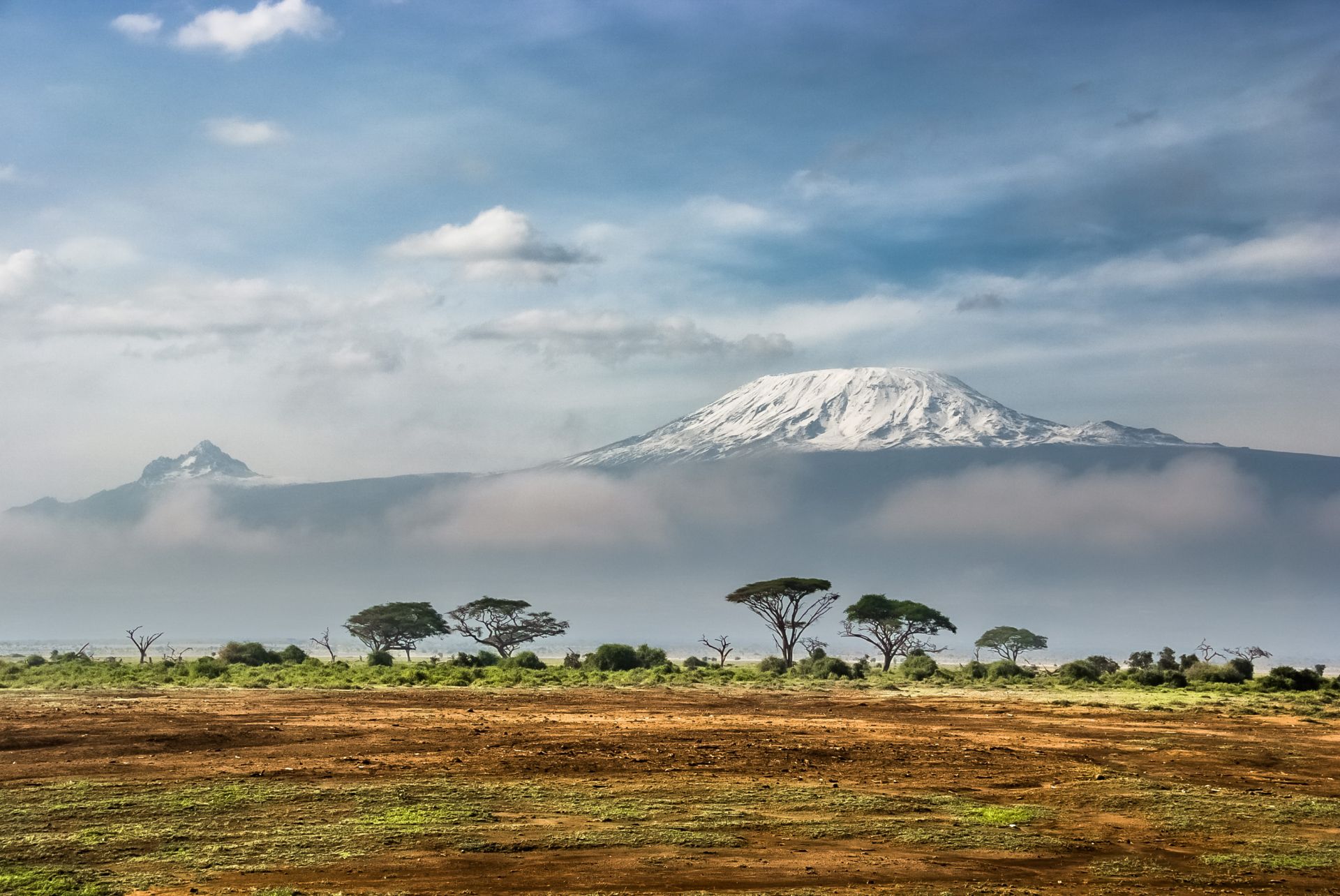
Mount Kilimanjaro
Africa's highest mountain at 5,895 metres, a free-standing volcano rising from farmland and forest to summit ice. Many travellers pair a climb with a few days on safari; others simply admire it from below.
Plan your time here
Tell us your dates and what you would like to see, and we will suggest a route.
Africa's highest mountain
Mount Kilimanjaro rises to 5,895 metres at Uhuru Peak, on the rim of Kibo, the highest of its three volcanic cones. Shira to the west and Mawenzi to the east make up the rest of the massif. It stands alone above the plains, which is why it looks so big: on a clear day you see the whole mountain at once, from the farmland around Moshi up to the ice near the summit.
Kilimanjaro National Park protects the upper slopes and is a UNESCO World Heritage Site. Plenty of travellers never climb it. They watch it from Arusha National Park or the road, when the summit is usually clearest early in the morning.
From farmland to summit ice
A climb passes through distinct zones, and each one feels like a different place.
- Lower slopes: banana and coffee farms of the Chagga people.
- Montane forest: wet, mossy and green, home to colobus and blue monkeys.
- Heath and moorland: open country of giant groundsels and lobelias, with views across the plains.
- Alpine desert: dry, stony and cold at night, with intense sun by day.
- Summit zone: ice, scree and the crater rim, well below freezing before dawn.
What a climb involves
Kilimanjaro needs no ropes or technical skills, but it's a long walk at serious altitude. Park rules require climbers to go with a licensed guide through a registered operator.
Established routes include Machame, Lemosho, Marangu and Rongai. They differ in scenery, crowds and how gradually they gain height. Most climbs spend about 6 to 9 days on the mountain, and longer itineraries give your body more time to adjust, which usually improves your chances of reaching the top.
Altitude sickness is the main risk, and being fit doesn't protect you from it. Walking slowly, drinking plenty and turning back when symptoms get worse matter more than speed. Summit night usually starts around midnight so you reach the crater rim near dawn.
If a climb is part of your plans, tell us when you enquire. We'll talk through how it could fit with your safari and confirm what we can arrange for your dates.
Best time to climb
- January to early March: generally warm and clear, with snow possible near the summit.
- June to October: the main dry season. Nights are colder and the popular routes are at their busiest.
- April and May: the long rains, with mud in the forest and cloud on the upper mountain. Few people climb.
- November and early December: the short rains, usually lighter than the long rains.
Combining a climb with a safari
The most common pattern is climb first, safari second. After a week of walking, a few days of game drives let your legs recover while you still see the northern circuit, and a beach stay on Zanzibar can follow. Some travellers prefer a gentle day walking in Arusha National Park first, to start adjusting to altitude.
Our Kilimanjaro and safari page explains how the pieces fit together, and a Zanzibar beach extension makes a natural ending. With only a few days to spare after the climb, look at short safaris.
Practical notes
- Getting there: Kilimanjaro International Airport lies between Arusha and Moshi, and most routes start from gates on the southern and western slopes.
- Nights: add a night in Moshi or Arusha before and after the climb to rest and prepare.
- Insurance: check that your travel insurance covers trekking to 6,000 metres and emergency evacuation.
- Health: see your doctor before booking, especially if you have heart or lung conditions.
- Kit: a climb and a safari need different clothes. Pack in soft bags, and ask about storing your safari luggage while you're on the mountain.
Plan your time
Through the year
Best months to visit: January, February, June, July, August, September, October
-
Warm dry window
January to early March is generally warm and clear on the mountain, with fewer climbers than mid-year. Snow is possible near the summit. Rain becomes more likely as March goes on.
Warm dry window: January, February, March
-
Long rains
Heavy rain in the forest and cloud on the upper slopes. Trails are muddy and views are rare, so few people climb.
Long rains: April, May
-
Main dry season
Dry, settled weather and the busiest months on the popular routes. Nights at altitude are very cold, so a good sleeping bag and warm layers matter.
Main dry season: June, July, August, September, October
-
Short rains
Showers return, usually lighter and shorter than the long rains. Quieter trails, with cloud more likely in the afternoons.
Short rains: November, December
Things to do here
Places to explore
Questions travellers ask
How hard is it to climb Kilimanjaro?
It's a non-technical climb, so there are no ropes or climbing skills involved, but it is demanding. You walk for several hours a day for about a week, and summit night is long, cold and steep. The real challenge is altitude, which affects people regardless of fitness. Training on long hill walks helps, and so does choosing a longer itinerary.
How many days does a Kilimanjaro climb take?
Most climbs spend about 6 to 9 days on the mountain, depending on the route. Shorter itineraries exist, but they give your body less time to adjust to altitude and usually have lower summit success. Add a night in Moshi or Arusha before and after the climb. If you plan a safari too, allow at least a few extra days on top.
Should we climb Kilimanjaro before or after the safari?
Most people climb first. A safari afterwards is a restful way to recover, since you spend much of the day sitting in a vehicle, and you finish the trip relaxed rather than exhausted. Some travellers add a gentle walk in Arusha National Park beforehand to start adjusting to altitude. A beach stay on Zanzibar can round off either order.
Can we see Kilimanjaro without climbing it?
Yes. On clear days the mountain is visible from Arusha National Park, from parts of the road between Arusha and Moshi, and from the air on flights in and out of Kilimanjaro International Airport. The summit is usually clearest early in the morning, before cloud builds. The dry months give you the best chance.
Plan a journey that includes Mount Kilimanjaro
Tell us when you would like to travel and what matters to you. We will suggest how long to give Mount Kilimanjaro and what to pair it with.