
Walking safari
Guided walks with an armed ranger or walking guide, where permitted and arranged: tracks, birds, plants and the feel of the bush on foot. A slower, closer way to see northern Tanzania.
The bush on foot
In a vehicle you see the animals. On foot, you start to see everything else: the tracks from last night, the dung beetles at work, the birds you'd never hear over an engine, the smell of the bush after rain. A walking safari slows you down and brings you closer to the ground.
In northern Tanzania, walks are led by an armed ranger or a qualified walking guide, and they can only take place where permitted. All of the walks below can be arranged where available.
Where you can walk
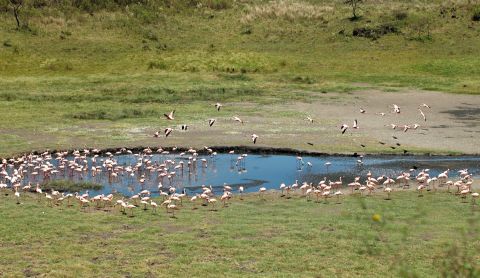
- Arusha National Park: walks with an armed park ranger through open country near the Momella lakes, often among giraffe and buffalo.
- Tarangire: walks in designated areas of the park or the wildlife areas around it.
- The Ngorongoro highlands: guided walks on the crater rim and in the wider conservation area, with a ranger.
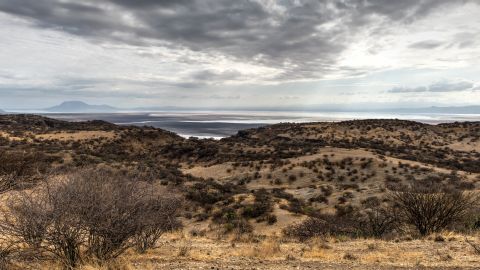
- Lake Natron: the gorge walk to the Engare Sero waterfall, with a local guide.
- Lake Eyasi: walks with Hadzabe hunters, where a cultural visit is arranged.
Who it suits
Repeat safari-goers, keen naturalists, birders and anyone reasonably fit who wants a different perspective. Walks are usually gentle in pace, but the ground can be uneven and hot. Age limits usually apply, so walking safaris suit adults and older children best.
What to expect
Most walks start early in the morning, when it's cool and the animals are active, and last a couple of hours. You'll get a safety briefing first. You walk in single file behind the ranger, keep quiet and follow instructions without question. Big animals are viewed from a respectful distance, and the ranger decides how close you go.
The real reward is often small: a set of fresh lion tracks, a chameleon on a branch, or the way an impala herd reacts to you on foot.
Comfort levels
At comfort level, walks are usually added as a short activity during a game-drive safari, such as a morning in Arusha National Park. At luxury level, some camps in private concessions or wildlife areas have their own walking guides and make walks a regular part of the day, where permitted.
Practical considerations
- Clothing: neutral colours, long trousers and closed, comfortable walking shoes.
- Sun and water: a hat, sunscreen and water for every walk.
- Fitness: you don't need to be an athlete, but you should be comfortable walking for a couple of hours on rough ground.
Tell us you'd like to walk on the plan your safari page, and we'll check what can be arranged for your route and dates.
Journeys with this experience
Where it happens
Questions travellers ask
Are walking safaris safe?
Walks are led by an armed ranger or a qualified walking guide who knows animal behaviour well, and they only take place in areas where walking is permitted. You get a safety briefing first and walk in single file, following instructions at all times. Big animals are viewed from a respectful distance. As long as you listen to your ranger, the risk is low.
Is there an age limit for walking safaris?
Usually, yes. Most walking activities set a minimum age, and the exact limit depends on the park, the area and who leads the walk. Walks suit adults and older children who can stay quiet and follow instructions. Tell us the ages of everyone in your group when you enquire, and we'll check what's possible on your route.
How fit do we need to be for a walking safari?
Not very. Most walks last a couple of hours at a gentle pace, with plenty of stops to look at tracks, plants and birds. The ground can be uneven and the sun strong, so you should be comfortable walking on rough paths in the heat. The Ol Doinyo Lengai climb at Lake Natron is the exception: it's very demanding.
Build a journey around Walking safari
Tell us when you would like to travel, and we will suggest where and when it fits best, and what to pair it with.