Great migration safari
A safari planned around the wildebeest and zebra herds of the Serengeti ecosystem, timed to where they usually are in your month. The pattern repeats each year, but it varies with the rains.
Following the herds
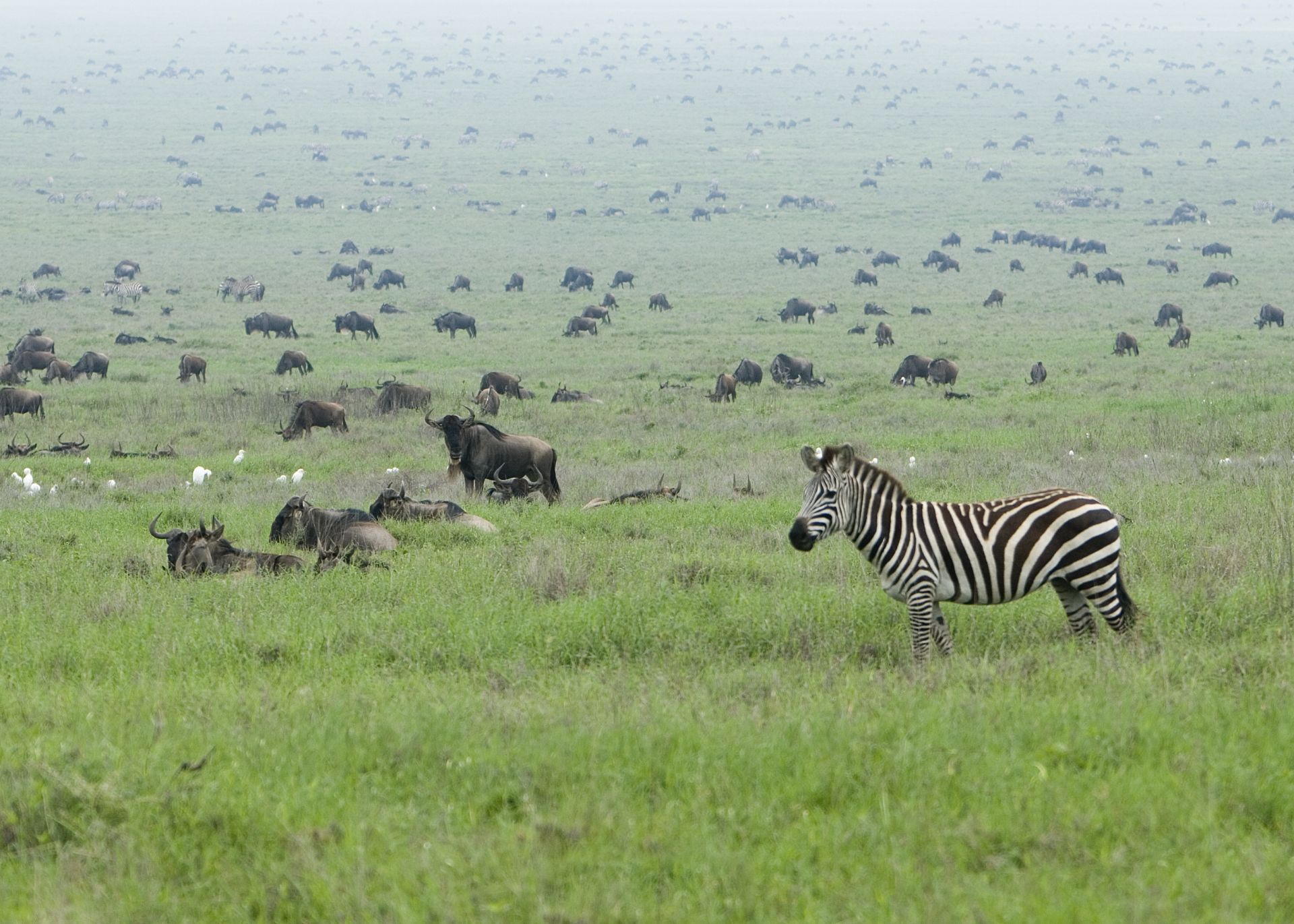
The great migration is the movement of well over a million wildebeest, with zebra and gazelle, around the Serengeti ecosystem in a loose annual loop. The herds follow rain and fresh grass. A migration safari is planned so your camp is close to where they're likely to be when you travel.
The key word is likely. The herds move to their own timetable, and it shifts with the rains every year.
The general annual pattern
This is the pattern in most years. Treat it as a guide, not a schedule.
- December to March: the herds usually spread across the short-grass plains of the southern Serengeti and the Ndutu area. Calving tends to peak in February.
- April and May: the long rains. The herds begin moving north and west through the centre of the park.
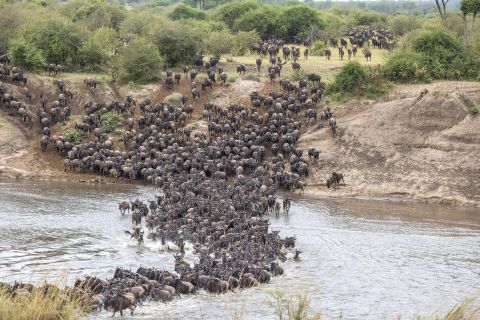
- June and July: they often reach the Western Corridor, where the Grumeti River can bring the first crossings.
- August to October: the herds are usually in the northern Serengeti, crossing the Mara River back and forth.
- November: with the short rains, they start drifting south again.
A late or early rainy season can move all of this by weeks. Our great migration month by month guide explains each stage.
Who it suits
Anyone who wants to see the herds at scale, especially photographers and repeat visitors. If you want a broader safari with the migration as one part of it, a classic wildlife safari timed for the right month does that.
What to expect day to day
Days are spent finding and staying with the herds. In the north, that may mean waiting for hours near the Mara River for a crossing that may or may not come. On the southern plains, it means long drives across open grassland, with predators often close to the herds.
Comfort levels on a migration safari
At luxury level, seasonal camps move during the year to stay near the herds, which puts you close to the action at dawn. At comfort level, you'll often stay in a fixed lodge or camp and drive further each day, which works well in central Serengeti but is harder in the far north. Flying in and out of the northern Serengeti saves a long drive at either level.
Practical considerations
- Book early for August to October and February. Camps near the herds fill first.
- Allow time: three or four nights in one area gives you far better odds than one or two.
The 7-day great migration safari is planned around this pattern. Start with the Serengeti page for the park itself.
Tell us your travel month on the plan your safari page and we'll suggest where to base yourself.
Journeys with this experience
Where it happens
Questions travellers ask
When is the best time to see the great migration?
It depends what you want to see. For calving and predators on the open plains, January to March in the southern Serengeti is usually best. For river crossings, the Mara River in the north is usually busiest from about August to October. The herds are somewhere in the ecosystem in every month, but the exact timing varies with the rains each year.
Can you guarantee we will see the migration?
No one honestly can. The herds move with the rains, and their position can shift by weeks from one year to the next. What we can do is plan your camp location around where they usually are in your month and leave enough nights to find them. In most years that works well, but wildlife never runs to a schedule.
Will we see a river crossing?
There's a good chance from about August to October if you stay three or four nights in the northern Serengeti, but no certainty. The herds gather at the Mara River and may cross several times in a day, or not at all for days. Guides often wait for hours at a likely spot. Patience and time on the ground are what improve your odds.
Build a journey around Great migration safari
Tell us when you would like to travel, and we will suggest where and when it fits best, and what to pair it with.